
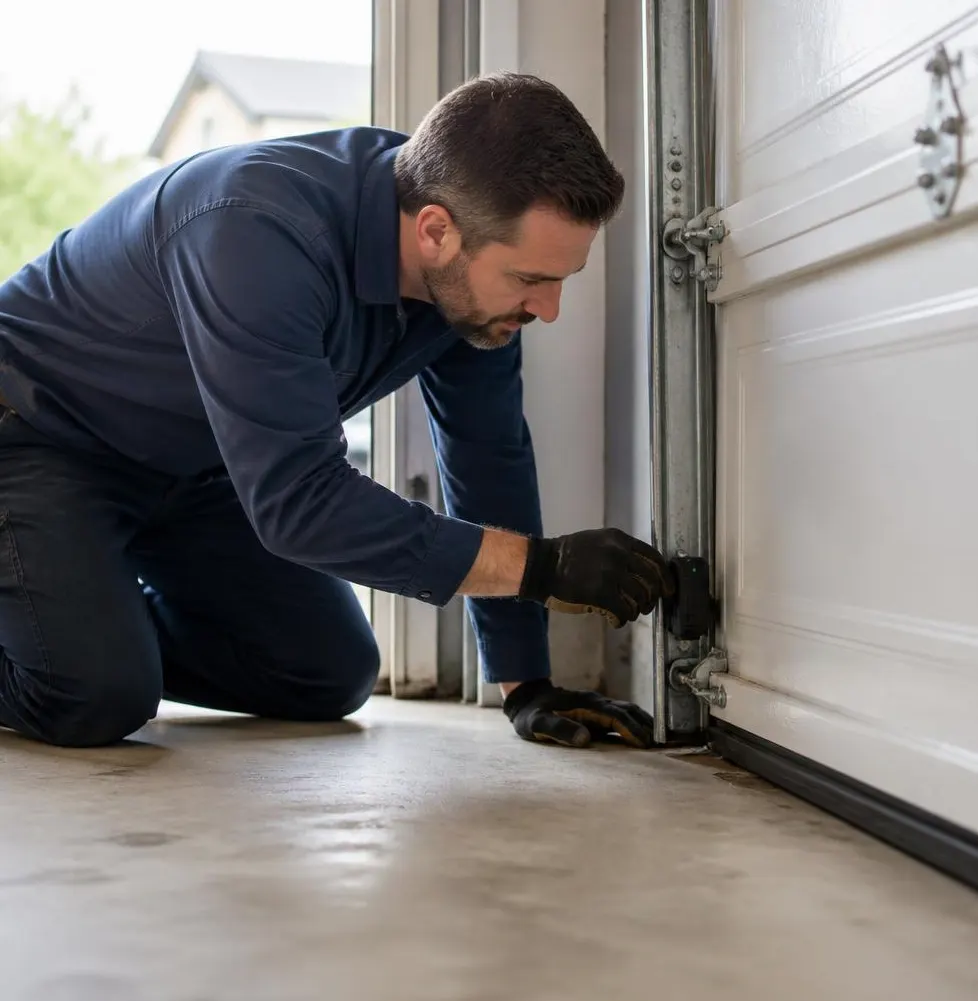
The Rule, and the Narrow Exceptions
If a garage door spring is broken or sagging, don't touch it — leave the door closed and call a technician. That's the rule, and it holds for torsion springs mounted above the door and the older extension springs running along the horizontal tracks. The only real exceptions are things that don't involve the spring at all: pulling the emergency release cord to manually open a closed, properly-balanced door during a power outage, or visually inspecting the spring from a distance to see if a coil is separated. The moment a tool touches the spring itself, you're outside safe DIY territory.
What's Actually Stored in That Coil
A standard residential torsion spring is wound under tremendous tension to counterbalance a door that can weigh 130 to 400 pounds, depending on size and material. Manufacturers generally rate that stored force in the range of 300 to 700 pounds of pull, depending on door weight and spring size. That energy doesn't leak out gradually — it releases all at once if the winding cone slips, the spring is cut with the wrong tool, or a cable detaches under load. There's no safe way to "ease into it." Either the spring is fully controlled with the correct winding bars, or it isn't controlled at all.
How People Actually Get Hurt
Most spring-related ER visits follow a familiar pattern:
- Winding bar slips or isn't seated properly, and the spring unwinds in a fraction of a second, whipping the bar out of the installer's hands with enough force to break fingers, wrists, or facial bones.
- A cable snaps mid-repair because it was already frayed from rust or wear, and the sudden shift sends the door crashing down on hands, feet, or a vehicle.
- The door itself falls while someone is working underneath it without a secured locking pliers or vice-grip holding the track, resulting in crushed fingers or worse.
- Flying metal fragments from an improperly cut or already-corroded spring cause eye injuries, which is why professionals wear face shields, not just safety glasses.
None of these require a freak accident — they're the predictable result of applying force to a wound spring without the right bars, clamps, and technique.
Why This Is Worse in This Climate
Hardee County's humidity and the afternoon downpours that roll through much of the year accelerate rust on spring coils, cable strands, and winding cones. A corroded spring doesn't fail cleanly — it can seize partway, then let go unevenly, which makes the unwinding motion less predictable than a spring in a dry climate. Homes near the coast dealing with salt air see this even faster. If you've noticed a reddish-brown coating on the coils or a cable that looks fuzzed or kinked, that's corrosion weakening the metal, and it raises the odds of a sudden, uneven failure during any attempt to work on it.
Signs a Spring Is Already Failing
Catching the warning signs early means you can schedule a repair on your terms instead of dealing with a dangerous surprise:
- A loud bang from the garage, often mistaken for a car backfiring or something falling — that's frequently a torsion spring snapping.
- The door feels unusually heavy when lifted manually, or won't stay up on its own partway.
- One side of the door looks visibly lower or crooked when it's opening or closing.
- A visible gap in the coil where the spring has separated.
- The opener strains, grinds, or reverses unexpectedly because it's trying to lift a door that's no longer properly counterbalanced.
If you see any of these, stop using the garage door opener and the door itself until it's inspected. Running a door with a failing spring puts extra strain on the opener's gears and can damage the track or panels too.
What You Can Safely Do Yourself
There's plenty of useful maintenance that doesn't involve the spring at all:
- Lubricate rollers, hinges, and the track (not the spring coils) a few times a year — this matters more here because humidity swings cause metal parts to swell and bind.
- Tighten visible bolts on the track brackets, which can loosen from the vibration of daily use.
- Check and replace worn weatherstripping at the bottom of the door to keep wind-driven rain out during storm season.
- Clear tracks of dirt, insects, and debris so rollers move freely.
- Know where your manual release cord is and test it only when the door is fully closed, so you're not catching a heavy, unbalanced door.
All of this keeps the system running smoothly and makes it easier for a technician to spot problems early, but none of it puts you anywhere near the spring itself.
When to Call Bowling Green Overhead Door Co
If you've heard a bang, noticed a crooked door, or spotted rust on the coils or cables, that's the moment to call rather than reach for a wrench. Our garage door spring repair service includes replacing both springs as a set (even if only one has failed, the other is usually close behind), using properly rated springs for your door's weight and the wind-load demands common in this area. We also handle garage door cable repair at the same time when needed, since frayed cables and worn springs often fail together and both need the door fully secured before any work begins. We bring the correct winding bars, clamps, and safety gear, and we test the full balance and travel of the door before we leave.
If your garage door in Bowling Green, Wauchula, Fort Meade, Zolfo Springs, Avon Park, Sebring, Arcadia, or Frostproof is making noise, sagging, or just doesn't feel right, give us a call before storm season puts more strain on it. A quick inspection now is a lot cheaper than an ER visit later.