
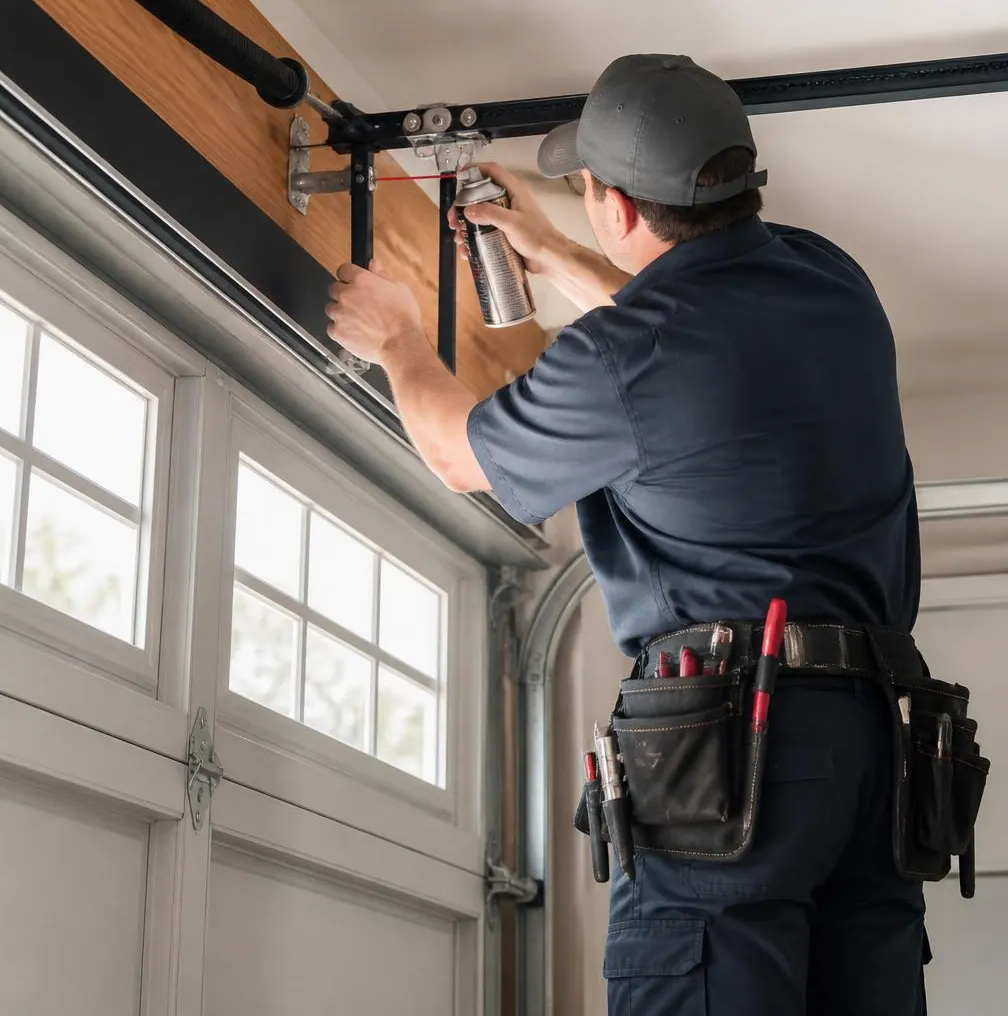
The Sound That Stops You Mid-Step
You're pulling into the driveway after an afternoon downpour, hit the opener remote, and instead of the usual smooth hum, the door makes a sound that makes you freeze. Maybe it's a deep grinding, a sharp squeal, a loud pop, or a rattle that shakes the whole frame. Garage doors in this part of Florida work hard through humid summers and sudden storms, and the noise they make is usually the first real warning sign something is wearing out or shifting out of place. Here's what each sound typically means, and the order a technician would actually check things to find the cause.
Grinding: Something Is Fighting the Track
Grinding is a low, mechanical noise that usually happens as the door moves along its full path, not just at one spot. It often gets worse the longer the door has gone without attention.
- Rollers first. A technician checks the rollers before anything else, since worn nylon rollers or rusted steel ones are the most common grinding culprit. Months of humidity can corrode steel rollers even when they look fine from the ground.
- Roller bearings next. If the rollers spin but still grind, dried-out or rusted bearings inside them are usually to blame.
- Track alignment last. If rollers and bearings check out, the track itself may have shifted slightly, which is common after a door has been forced through a storm-driven gust or an off-track event.
The fix ranges from simple lubrication and roller replacement, usually a straightforward job, to re-aligning or replacing a bent track, which takes more time and precision to get the door running true again.
Squealing: Friction Without Enough Lubrication
Squealing is a higher-pitched sound, often most noticeable right as the door starts or stops moving.
- Lubrication is checked first. Florida humidity dries out standard lubricant faster than drier climates, so a garage door that hasn't been serviced in a while almost always needs fresh silicone-based lubricant on the rollers, hinges, and track.
- Worn rollers come next. If lubrication doesn't quiet things down, the rollers themselves may be worn past the point where oil helps.
- Opener chain or belt last. On openers with a chain drive, a dry or stretched chain can squeal independently of the door itself; belt-drive openers rarely squeal unless the belt is damaged.
Most squealing is resolved with a proper lubrication pass as part of a tune-up. If rollers are the issue, replacing a full set is a modest job that also helps the door run quieter and move more smoothly during daily use.
Popping: Sudden Tension or Movement
Popping is a sharp, isolated sound, sometimes a single loud pop, sometimes a series of smaller ones during opening or closing.
- Springs are checked first. A popping sound during the first few inches of movement often points to a torsion or extension spring losing tension unevenly, which is also a common precursor to a full spring failure.
- Track gaps checked second. If the pop happens at a consistent point along the door's travel, a gap or slight misalignment in the track can cause the rollers to pop as they pass through it.
- Panel material checked third. On wood or wood-composite doors, humidity swelling can cause panels to pop as they flex against hardware or each other, especially after a stretch of heavy summer rain.
Spring-related popping should be taken seriously, since a spring under uneven tension can fail suddenly and without much more warning. This is one of the few garage door issues where waiting it out isn't a reasonable option, given how much force is stored in a wound spring.
Rattling: Loose Hardware Looking for Attention
Rattling is a looser, metallic shaking sound, often most noticeable on windy days or when the opener first engages.
- Hardware fasteners checked first. Bolts and brackets holding the track and hinges in place loosen gradually with every open-and-close cycle, and vibration from storm-season winds can speed that up.
- Roller condition checked second. Loose-fitting rollers in worn track channels can rattle even when everything else is tight.
- Opener mounting checked last. A rattling opener unit, rather than the door itself, often means the mounting bracket has worked loose from the ceiling over time.
Rattling is usually the easiest noise to fix, often just a matter of tightening hardware and replacing a few worn rollers. It's also worth noting that homes here are built with wind-load rules in mind for hurricane season, and a door that rattles excessively in moderate wind is worth having checked before storm season ramps up again, since loose hardware under wind pressure wears out faster.
When to Call Bowling Green Overhead Door Co
If the noise doesn't clear up after basic lubrication, or if you notice grinding alongside visible rust, a popping sound near the springs, or rattling that's gotten noticeably louder over a few weeks, it's time to have it looked at. Our technicians start with the same checklist above, rollers, bearings, track, springs, and hardware, to pin down the source before recommending a fix. For most noise complaints, that means a garage door maintenance and tune-up visit, which covers lubrication, hardware tightening, and roller inspection in one trip. If the sound traces back to a spring losing tension or a track that's shifted out of alignment, we'll walk you through garage door spring repair or off-track door repair options and what each one involves before any work starts.
If your garage door in Bowling Green, Wauchula, Fort Meade, Zolfo Springs, or anywhere in Hardee County has started making a sound you can't explain, give Bowling Green Overhead Door Co a call. We'll track down the cause and get it running quietly again.